Weaponised Surveillance: Ethiopia’s Digital War on Women Human Rights Defenders
Author
Endalkachew Chala

Meskerem Abera, an Amhara nationalist activist, launched  Ethio Nikat Media, a YouTube-based news channel, while teaching at Hawassa Teachers College in southern Ethiopia in 2022. Within a year, she had over 48,000 subscribers. Then, in 2023, she became one of at least eight journalists and human rights defenders arrested on allegations ranging from inciting violence to undermining state authority.

While in detention, recordings of her deeply  personal conversations were leaked online and submitted as evidence in court. Her case marked a chilling shift: wartime-grade surveillance tools, once used primarily for political repression, are now deeply embedded within Ethiopia’s domestic justice system.

Surveillance in Ethiopia has evolved beyond a mere function of the state—it has become a central strategy of governance. When deployed against women, its effects are particularly devastating. Tools once reserved for military intelligence—call interception, movement tracking, metadata harvesting—are now used to intimidate, humiliate, and silence women human rights defenders (WHRDs).

The gendered dimensions of this surveillance are especially insidious. Leaked recordings, often decontextualised or manipulated, are distributed by coordinated networks of pro-government digital actors. These materials disproportionately target women, weaponising misogyny and digital gender-based violence to undermine their credibility.

“It’s not just about politics,” said one WHRD, speaking anonymously due to safety concerns. “It’s about humiliation. They turn our private lives into weapons.”

This ecosystem thrives on fear. Surveillance doesn’t merely extract information—it amplifies vulnerability, intersecting with deep-rooted misogyny, stigma, and social exclusion.

Weaponised leaks

Personal phone calls, once assumed private, frequently surface on social media—stripped of context and strategically timed to inflict reputational damage. These leaks rarely come from formal institutions. Instead, they’re disseminated by quasi-influencers and government-aligned digital actors.

One prominent figure is Natnael Mekonen, a former TPLF critic turned government supporter, with large Telegram and Facebook followings. Natnael frequently posts graphic war content and intercepted audio clips from private conversations, primarily targeting civil society actors. He is part of a larger network of digital enforcers with privileged access to surveillance data.

This tactic was clearly seen in 2023 when opposition leader Dr. Chane Kebede was arrested after a leaked phone call allegedly showed him sharing military intelligence with Amhara rebels. The recording, almost certainly obtained without a warrant, pointed to the erosion of legal safeguards and the normalisation of extrajudicial surveillance.

Legacy of control, reinvented for the digital age

Surveillance in Ethiopia has long been an elite practice, deeply embedded in the country’s political history. During the TPLF-dominated era, the government routinely attempted to monitor foreign-based opposition groups, while simultaneously turning surveillance inward to keep tabs on internal rivals. In the waning days of TPLF dominance, factional infighting spilled into the digital realm—private online activities of high-ranking figures like Debretsion Gebremichael were leaked as political weapons. At the height of its power, the TPLF institutionalized surveillance through the “one-to-five” grassroots structure, a neighborhood-level monitoring system designed to extend state oversight into the most intimate corners of daily life.

Although this manual surveillance network was officially dismantled after 2018, its legacy persists—transformed rather than eliminated. What was once analog has now gone digital. Today’s surveillance culture is more fragmented, but arguably more invasive and difficult to trace. The architecture of surveillance now includes a wide array of actors: national telecom authorities, federal and regional security agencies, regional militias, and even diaspora propagandists. The boundaries between state security, political retribution, and personal vendetta have become dangerously fluid.

State-aligned hackers and coordinated networks of social media trolls have become central players in Ethiopia’s evolving surveillance landscape. These actors routinely impersonate journalists, infiltrate email accounts, and leak private messages—not for public accountability, but to intimidate, discredit, and silence. Surveillance today is no longer the exclusive domain of the state; it has morphed into a diffuse, Weaponised ecosystem, where intimidation operates through both official and unofficial channels.

Surveillance as a weapon of domestic warfare

Ethiopia’s surveillance is nominally governed by two laws; the Telecom Fraud Offenses Proclamation and the Computer Crime Proclamation. But in practice, legal safeguards are weak and enforcement tends to protect state interests. Warrantless surveillance is routine, and the judiciary provides little oversight.

This was evident in the police raid on the offices of Addis Standard, a respected independent media outlet. In a post on X (formerly Twitter), publisher Tsedale Lemma warned that confiscated electronics left their communications vulnerable. “The use of these devices outside our control presents serious risks not only to our staff’s safety but also to the integrity of our journalistic work,” she warned.

When contacted afterward, Tsedale added: “The team during the raid was told the police had been surveilling their activities for days before. I found it perplexing—though not surprising. I hesitate to say more without endangering the team.”

The gendered toll of digital repression

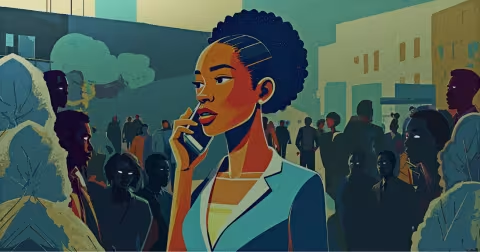
Women human rights defenders face compounded threats, navigating layers of surveillance intertwined with gendered abuse. One prominent woman journalist, speaking anonymously, noted, "We don’t just fear surveillance for political reasons—it feels intensely personal, intrusive in ways men may not fully grasp. Our private lives become ammunition."

Another woman journalist and human rights defender, also speaking anonymously, revealed, "They release intimate conversations to silence us. It's psychological warfare—knowing your most private moments can be Weaponised publicly."

Detailed case studies highlight these profound psychological impacts. Journalist Rahel (name changed), who fled Ethiopia after persistent digital threats, described experiencing anxiety attacks whenever her phone rang. "Every notification was terrifying," she explained. "I couldn’t sleep without constantly checking if my private messages had been leaked online. The fear invaded every aspect of my life."

Another journalist, Sofia (name altered for anonymity to avoid reprisal), described being blackmailed by anonymous online actors who threatened to expose personal details unless she ceased critical reporting. "The threat wasn't only professional—it destroyed my sense of safety and trust," she recounted. "I felt completely vulnerable, even within my own home."

The current surveillance landscape is less centralized, more fragmented, and arguably more dangerous. Armed groups, opposition networks, and government agencies alike now participate in digital surveillance, often weaponising social media to track critics. These campaigns have, in some cases, led to physical harm. In 2021, humanitarian aid worker Yared was abducted and killed in the Amhara region by armed non-state actors who closely monitored his online activities. Similarly, journalist Sisay Fida, working for the Oromia Broadcasting Network, faced intense digital surveillance and threats from armed groups before being murdered in Dembi Dollo. These tragic cases illustrate how surveillance by both state and non-state actors can escalate into physical violence, profoundly affecting journalists and activists alike.

Beyond politically motivated surveillance, an investigation by Shega Media revealed a digital underworld where non-state actors and individuals exploit young women by non-consensually sharing intimate images. Some of these images are obtained through surveillance, the confiscation of personal devices, theft, or by tricking individuals into sharing them under false pretenses. Telegram channels operate profitably, offering tiered access to explicit content, exacerbating gender-based violence and exploitation. This clandestine industry intensifies psychological trauma, isolation, and public humiliation among women, particularly impacting journalists and activists.

Shega Media’s reporting documented over a dozen Telegram channels that marketed themselves as both entertainment and blackmail venues. They offered subscription-based access to sexually explicit content, including images stolen or coerced from young women. One woman whose images were circulated told Shega, "I had to leave school. I couldn't face anyone. I still don’t know who did it or how they got the pictures." The sense of powerlessness, combined with the absence of legal protection or institutional redress, contributes to a pervasive atmosphere of fear.

One recent flashpoint that captured national attention came from a segment aired on the welfare programme New Chapter on EBS TV. In the broadcast, a woman described being kidnapped and gang raped while she was a university student. The segment triggered a wave of public empathy, especially given the programme’s wide reach among working- and middle-class Ethiopians.

But within hours of the broadcast, pro-government influencers began releasing fragments of alleged evidence suggesting the woman had conspired to fabricate the story. Their confidence in the collapse of her credibility was striking. Some even predicted, accurately, that state media would soon air a counter-narrative. These actors hinted at access to recordings not yet public, raising questions about how the material had been obtained.

One plausible explanation is unauthorized access to telecommunications data—either through real-time interception or via state-linked archives. In short order, Ethiopian state television aired audio purportedly capturing the woman and an accomplice discussing plans to manipulate public opinion. Though some supporters of the woman claimed the recordings were manipulated, independent analysts found no definitive evidence of fabrication. What alarmed many was not the content of the tapes but the speed, coordination, and ease with which private speech became public spectacle.

The broader impact is not just legal but psychological. “The knowledge that we are being listened to has a damaging psychological impact on human rights defenders and journalists,” said Befeqadu Hailu, a seasoned analyst of Ethiopian political life. “The bad thing is not only that people like journalists and activists can’t safely talk about their work—they can’t even talk to their partners over regular phone lines. There’s a high chance someone is listening.”

As Ethiopia grapples with internal conflict, deepening political fragmentation, and an information ecosystem saturated with distrust, the boundary between surveillance and propaganda is steadily dissolving. Each leaked conversation, orchestrated smear campaign, and strategically timed exposure constricts the already fragile space for democratic discourse. Yet this narrowing of civic space is not merely ideological—it is rooted in the country’s digital infrastructure and the stark inequities that shape who can communicate securely and who cannot.

Encryption for the privileged few

Encrypted messaging apps like Signal and WhatsApp have become indispensable—not just for organizing activism, but for the most basic forms of communication. However, access to these tools is far from universal. In practice, secure digital communication is often the preserve of those with the means, knowledge, and language support to navigate it. This digital divide has turned encryption itself into a form of privilege. A former high-ranking government insider, who requested anonymity, revealed that senior officials—including former Deputy Prime Minister Demeke Mekonnen—regularly use Signal with auto-delete features to protect sensitive communication. “Even within government circles,” the source admitted, “mistrust runs deep. Everyone is watching everyone else.”

This mistrust is mirrored—and magnified—outside the halls of power, where the capacity to defend against digital surveillance remains uneven. As surveillance technologies become more sophisticated, the tools meant to resist them remain inaccessible to those most vulnerable. While government officials, NGO personnel, and urban elites in Addis Ababa routinely use encrypted platforms, journalists, human rights defenders, and grassroots activists—especially in rural and marginalized communities—are often left without the devices, training, or linguistic resources necessary to protect themselves.

“Even if I wanted to use Signal, I wouldn’t know where to start,” said Lensa, an Oromo rights activist based in Addis Ababa. “No one’s teaching us, and the guides I’ve found aren’t even in our language. I hear government people use it all the time to protect themselves—why not us?”

Digital rights resources such as the Electronic Frontier Foundation’s Surveillance Self-Defence guide or Tactical Tech’s toolkits were once lifelines for at-risk groups. Today, however, their impact is limited: seldom updated in Amharic and almost entirely unavailable in Oromo or Tigrinya. This linguistic exclusion compounds systemic vulnerability, further marginalizing those already on the frontlines.

For many independent journalists, the challenge is not just technical—it’s existential. “I know my phone isn’t secure,” said a reporter from an Amharic-language outlet, speaking anonymously. “But I can’t afford another device, and I don’t have time to learn encryption when I’m already racing deadlines and watching my back.”

The result is a stratified digital environment—those who can encrypt, and those who cannot. In Ethiopia, where surveillance is both a tool of repression and a public performance of control, digital protection is no longer just a matter of security. It is a marker of privilege, shaping who gets to be heard and who is forced into silence. It draws the line between visibility and vulnerability, between survival and erasure.

Resilience in the shadows

As the boundary between surveillance, propaganda, and personal violation continues to blur, Ethiopia’s social fabric is increasingly strained. Yet even in the face of such pervasive repression, resistance persists. “They surveil us to silence us,” said one defiant woman journalist. “But our stories, our voices—those they can’t fully control.” Her words speak to a deeper tension: while surveillance seeks to suppress dissent, it also reveals the regime’s fear of losing control over narrative and meaning.

What sets Ethiopia’s surveillance architecture apart is the way it seamlessly fuses monitoring and messaging. At the local level, government authorities are encouraged—even expected—to maintain a digital presence on platforms like Facebook. On the surface, these pages serve to highlight development projects, promote public services, and foster community engagement. But beneath that veneer of transparency lies another purpose: identifying and tracking dissent. Public relations officers working in district offices are quietly instructed to “highlight the good and quietly flag the bad,” as one media trainer put it. “It’s about narrative control, not just public communication.”

This digital transformation initiative, framed as progress, functions in practice as a containment strategy. The platforms designed to foster civic participation double as tools of surveillance. Engagement is not merely measured in likes or comments—it is parsed, categorized, and used to map political risk. In this environment, every post, every comment, every shared article becomes potential evidence. The appearance of openness masks a deeper logic of control. These platforms don’t just shape how stories are told—they help determine who gets to tell them.

What began under the TPLF as a strategy to monitor opposition groups abroad has since evolved into a far more expansive—and increasingly audacious—campaign. While the transnational reach of Ethiopia’s surveillance apparatus is not entirely new, its scope has deepened in troubling ways. Years ago, exiled Ethiopian journalists were targeted with commercial spyware such as FinFisher, prompting concern among international press freedom organisations. But what was once focused on silencing diaspora critics has now escalated into attempts to spy on foreign governments themselves.

In 2023, U.S. State Department employee Abraham Teklu Lemma was charged with passing classified Defence information to the Ethiopian government. The case, still under investigation, underscores just how far the surveillance state is willing to go—and how dangerously blurred the lines have become between national security objectives and covert geopolitical interference. Ethiopia’s surveillance ambitions now extend well beyond its borders, raising urgent questions about the country’s role in the global landscape of digital authoritarianism.

As digital surveillance expands alongside Ethiopia’s internal conflicts, the line between national security infrastructure and tools of gender-based control becomes harder to define. Technologies designed for counterinsurgency—from metadata interception to drone-enabled facial recognition—are being refitted for domestic use. For WHRDs, these wartime tools morph into instruments of intimate, sustained harm. Their phones, their bodies, and their relationships are all made legible to a state that increasingly governs through exposure and fear.

Digital rights advocates say Ethiopia’s evolving surveillance infrastructure reflects a broader global trend. “This isn’t just about Ethiopia—it’s part of a global shift toward digital authoritarianism,” said a digital policy expert based in Addis Ababa, who has worked with Freedom House and regional bodies like the Collaboration on International ICT Policy for East and Southern Africa (CIPESA). Speaking under condition of anonymity due to security concerns, the expert added, “What makes Ethiopia’s case especially distinct is how surveillance here is fused not only with state power, but with long-standing social hierarchies and factional rivalries. It’s not just about control—it’s about reinforcing who gets to hold power, both at home and abroad.”
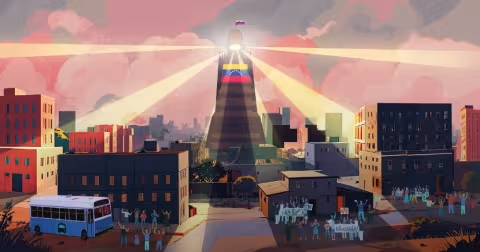
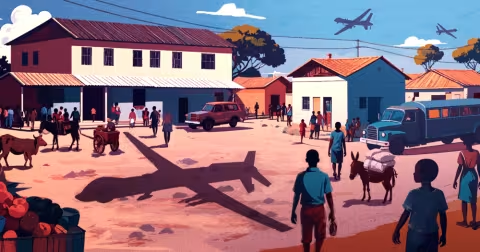
For women activists, Venezuela is a laboratory of repression, but also resistance

Author
Laura Vidal

In a web of chaos and control, where media, technology, and legislation is weaponised to carry out mass surveillance, criminalise dissent, cancel passports and restrict news, women human rights defenders lead and participate in creative ways to resist.

For women activists, Venezuela is a laboratory of repression, but also resistance

For the past ten years, as a Venezuelan, I have been monitoring the human and digital rights situation in Venezuela—from the outside yet deeply immersed. I have colleagues and dear friends that have endured searches, imprisonment, exile, and torture, often silenced by fear or direct orders forbidding them from speaking to the media. Their stories surface only in fleeting moments—in private when we cross paths in a distant city or shared in disappearing messages on Signal.

Many of the experiences I recount here belong to those friends and colleagues whose stories I cannot share in full—or even in part—without putting them at risk. To protect them, their testimonies are intertwined, at times blurred together, preserving only the most crucial details. Even anonymity is not always enough. Some of these accounts come from those who have already left. Others, experts who helped shape this piece, remain inside, navigating a system that punishes even the smallest attempt to challenge power.

While these forms of technological repression affect the entire population, for women—particularly journalists, activists, women in politics, or those overtly critical of the government—they compound the structural discriminations they already face. Online harassment, digital surveillance, and doxxing are often gendered, targeting their bodies, their families, and their credibility in ways designed to humiliate and silence. These attacks are particularly vicious and aim to destroy their public reputation in ways their male counterparts are not subjected to—often through sexualised threats, smear campaigns, and attempts to discredit their professional and moral integrity. The fear of being identified—of having a photo or message used to justify state retaliation—adds another layer to the already immense personal cost of resistance. Even under anonymity, the risk continues to loom large. For many women, the choice is not only between speaking out or staying silent, but between exposure and safety. Being arrested carries the threat of mistreatment and torture, but for women, being sexually abused is almost a guarantee.

The Venezuelan government has built layers of threats to make repression difficult to denounce. Yet, full silence has not been achieved.

What is happening in Venezuela is not a single mechanism of repression but a web of chaos and control that weaponises technology and legislation. Exploring this web takes time, and a certain comfort with disorder, constant change, and contradictory information that defies common classifications. Laws are used to criminalise dissent, bureaucracy is weaponised to create fear and restrict movement, and digital tools enable both targeted repression and mass surveillance. Yet, women activists lead and participate in creative ways to resist, more on that towards the end.

A system of control based on media, legislation and technology

Venezuela’s descent into authoritarianism has been a gradual, carefully orchestrated process. The transformation of the media landscape is one of the clearest examples of how this process has played out. Independent media in Venezuela did not vanish overnight; it was dismantled in phases, reshaped by a slow erosion that turned legal technicalities into weapons against the press. It could be said that the shift began in 2009 with the forced closure of dozens of radio stations and the decision not to renew the broadcasting licence of RCTV, one of the country’s oldest and most widely viewed television networks. President Hugo Chavez, who branded himself as a revolutionary and anti-imperialist leader, accused the channel of having supported the 11 April 2002 coup attempt in which he was briefly overthrown. 

Fast forward to 2024, a report from Venezuelan NGO Espacio Público counted over 400 media outlets being closed down. Ipys Venezuela also documented the phenomenon through a map of ‘information deserts’ where no independent media or non governmental information reaches vast amounts of the territory and millions of people. In certain towns, newspapers don’t exist in young people’s memories.

Legal censorship extended into the way laws were written and enforced, ensuring that dissent could be criminalised at any moment. The strategy was always the same: introduce vague and sweeping laws under the guise of maintaining order and protecting social peace, then apply them selectively to silence those who posed a threat to the government’s control. The Anti-Hate Law, passed in 2017, became one of the most effective tools for this. The law carries severe prison sentences for anyone accused of spreading messages of hate, discrimination, or incitement to violence, but what constituted a "message of hate" was left undefined

In 2024, another law was introduced to target civil society organisations, this time under the pretext of transparency and financial oversight. The so-called Anti-NGO Law forced non-governmental organisations to register under strict government supervision, with vaguely worded provisions that allowed authorities to shut down any organisation at will. This, in the context of a complex humanitarian crisis, leaves many without crucial support in the face of a wide lack of response from the state. It also propulses more targeted ways to repress, going beyond institutions or organisations to surveil and repress individuals.

Passport: a privilege that can be revoked

In the latest phase of the crisis, I saw friends forced to flee through the land border with Colombia after discovering that their passports had been annulled. This measure, used systematically since 2017, saw a sharp increase in 2024, after the contested presidential elections of that year, targeting journalists, women human rights defenders, and activists both inside and outside the country.

For many, the discovery that their passport had been annulled came suddenly. Some learned about it when attempting to leave the country, only to be stopped at the airport and told they no longer had a valid travel document. Others, fearing that checking their status online might flag them for further scrutiny, chose not to look at all. The fear of triggering an alert was often enough to keep people in a state of uncertainty, reinforcing a system where unpredictability itself became a tool of repression. As human rights defender Luis Carlos Díaz explains, “even those who went to official offices to try and resolve the issue found themselves at risk, with reports emerging of individuals being detained on the spot by military counterintelligence agents. In some cases, they were interrogated, extorted, or subjected to physical abuse. Others simply disappeared into detention centres, their families left without answers.”

Díaz also highlighted the existence of silent alerts—hidden markers in immigration databases that do not immediately block a person’s entry but trigger a secondary review. If someone with a silent alert crosses a checkpoint, immigration agents are instructed to call a superior from an intelligence agency, who then decides whether the person should be detained or allowed to pass.

For those already abroad, having their passport annulled meant an indefinite exile. It was no longer just a question of whether they could return to Venezuela; it also dictated whether they could continue their lives elsewhere. Ana* (whose name has been changed to protect their identity), a human rights defender now living abroad described how the annulment of her passport severed any possibility of seeing her family again in the mid to long term. For others, the consequences went even further. Marianne Díaz Hernández, a digital rights specialist and an expert in digital ID and data protection at Access Now described how, despite her expertise, she found herself trapped in a system she had spent years warning others about. She did not have her passport annulled but will have significant challenges in getting a new one, particularly if the Venezuelan government continues, as it has, to pay attention to human rights defenders abroad: “I’m counting backwards,” she says, explaining that with each exit stamp in her passport she’s brought closer to the moment when she would run out of blank pages and be forced to remain in her country of residence, with little to no possibility of movement. “De facto statelessness”, she calls it.

For those in Venezuela learning that their passport was annulled meant carefully and discreetly planning an escape, crossing the porous borders with Colombia or Brazil. Those who had to flee explain that these borders tend to be dynamic, used daily by local populations to work, study, and shop. Blending in is possible, so long as one does not carry two large suitcases and attract the wrong kind of attention. This means one needs to quickly and silently leave everything behind for an unknown period of time. However, even that depends on Colombian and Brazilian immigration officers looking the other way and stamping an entry without demanding proof of exit. Sometimes it works. Sometimes it does not. 

Thousands of passports have been revoked without warning, without a public announcement, without an identifiable pattern. They have targeted human rights defenders, journalists, political activists, and social media figures—but not all. That uncertainty, that arbitrary nature, is part of the strategy. Fear thrives in unpredictability.

Government apps and drones: a tool for snitching and surveillance

What was once primarily the work of intelligence agencies and security forces has now expanded into digitally enabled networks of snitching, crowd monitoring, and systematic tracking of dissent. The integration of mobile applications, community surveillance structures, and emerging tools like drones has allowed repression to scale in ways that were previously unthinkable.

Among the most striking examples of this shift is VenApp, an application promoted by the Venezuelan government as a tool for direct communication between citizens and state institutions. Initially, the government framed it as an e-government service platform developed by Tech & People Solutions SRL, a somewhat obscure company that has changed names and has also worked in collaboration with other companies based in Panama and the Dominican Republic that have worked on similar projects in those countries. VenApp was presented as a way for Venezuelans to file complaints about basic services, report infrastructure failures, or request assistance. However, from the moment it appeared, researchers like Iria Puyosa, from the Atlantic Council Democracy + Tech’s Initiative suspected it would serve a much darker purpose. “We imagined it would quite probably be used for surveilling users, to doxxing opposition sympathizers, and to geolocate protesters,” Puyosa said.

The post-electoral crisis in 2024 proved her right. By July 30, during the height of protests, Nicolás Maduro publicly announced that VenApp would now include an option to report individuals suspected of participating in “terrorist activities.” State-run media launched an informational campaign explaining how to use the app for these reports, encouraging government supporters to denounce protesters, opposition figures, or even neighbors who were perceived as anti-government. The government removed the app from major platforms just a day later, but the damage had already been done. Pro-government influencers, government-aligned networks, and state agencies had already spread the message that dissent was something to be reported.

Pro-government networks on Telegram, X (Twitter), and TikTok played a central role in amplifying this call for denunciation. Some groups began publishing “Wanted” posters featuring the faces of protesters, encouraging users to identify and expose them. 

Luis Carlos Díaz described the pattern: “the problem wasn’t just VenApp itself—it was the intent. Community leaders tied to government food programmes and local PSUV (the government’s political party) organizers were already in a position to report people informally, but VenApp gave them a way to do it publicly. It formalized community snitching, allowing these structures to target activists and neighbors. In many cases, being reported meant losing access to gas, subsidized food, or other basic necessities. This wasn’t just surveillance—it was a form of micro-revenge after the government’s electoral defeat on July 28. The state enabled its last remaining loyalists to go after their own communities.”

For Lexys Rendón, co-director of Laboratorio de Paz, the use of surveillance and digital snitching systems disproportionately affects women living in poverty or with humanitarian needs, turning them into high-risk targets for multiple forms of violence, including coercion and control: “Their vulnerability is further compounded in contexts of territorial conflict or areas under the presence of irregular armed groups, where state and non-state actors exert pressure and surveillance simultaneously. A striking example is that of Captain Lisa Henrito, a Pemon Indigenous leader and Guardian, who became the target of surveillance, criminalization, and threats on social media—a case that illustrates how Indigenous women leaders face layered forms of violence that combine gender, ethnicity, and political repression.

All this takes place in a communication ecosystem in which women are specifically targeted when they become visible or more active as journalists, in political discussions, spaces of dissent and human rights defence. The pattern is not anecdotal—it is measurable and consistent. Monitoring by ProBox and the C-Informa coalition during Venezuela’s 2023 opposition primaries revealed that female candidates received 60% more online attacks linked to their gender than male candidates. These weren’t critiques of political platforms or policy stances, but gendered slurs and misogynistic taunts—terms like “mujerzuela,” (whore) “sayona,” (in reference to a local mythical creature of the night) “loca,” (crazy woman) or “qué buena que estás” (“you’re so hot”) flooded platforms like X (formerly Twitter), TikTok, Facebook, and YouTube. Valentina Aguana, from Venezuelan digital rights organisation Conexión Segura y Libre, confirms these patterns in her observations of social media interactions: “this is something that has been taking place for years, with consistent reputational attacks that don’t happen in the case of men.”

This constant barrage of targeted attacks—both sexualised and dehumanizing—not only seeks to discredit women’s intellectual and political capacities but also aims to erode their legitimacy as public figures. As political analyst Natalia Brandler put it, “In politics, words are used to disqualify women’s capacities and devalue them as people in the eyes of the public.” 

During the protests contesting the results of the July election, Conexión Segura y Libre documented the presence of drones hovering above crowds, filming demonstrators from above. The purpose was not always clear, but the pattern was unmistakable—in many cases, the footage captured by these drones later appeared on government-aligned media and in social media spaces of government officials. Some videos zoomed in on individual faces in the crowds, creating a record of who was present and potentially marking them for future retaliation. The state-run broadcaster Venezolana de Televisión, along with Diosdado Cabello and other high-ranking officials, regularly shared drone footage of rallies, ensuring that opposition leaders and attendees knew they had been identified.

Conexión Segura y Libre has highlighted the capacity of these drones to focus sharply from long distances on specific individuals, suggesting a deliberate effort to identify and track demonstrators as part of a broader strategy of intimidation. The organisation documented several aerial recordings of opposition rallies where the government media emphasized close-up shots of protesters’ faces. One such instance occurred during a gathering in Caracas on August 3, when opposition leader María Corina Machado arrived face covered on a motorcycle to avoid identification but was filmed by a drone as she uncovered herself to step onto the stage. Similar footage was later shared from opposition demonstrations on August 17 and 28 in Caracas and other cities.

Conexión Segura y Libre also received social media reports indicating that between July 30 and August 3, 2024, drones were spotted flying over different areas of central Caracas at night, with visible lights suggesting they were searching for potential protest hotspots. Notably, drones were seen surveilling the city the night before Machado’s rally in the Las Mercedes district of Caracas. The use of surveillance technology was visibly documented not only through official government posts boasting about filming the protests but also through anonymous whistleblowers who provided photos of the drones themselves.

Among the incidents documented by Conexión Segura y Libre was the Gran protesta mundial (the “great world protest”) on August 17, when social media users in Valencia, Carabobo, shared with the organisation images of the drone operator. Based on images analysed directly by Conexión Seguria y Libre and user-generated reports, the organisation identified with high confidence the use of drones from the Autel Robotics Enterprise series, designed for government and corporate applications. Further analysis of the materials led them to conclude that the likely models used were EVO Max N4 or T4. These high-performance quadcopters differ from consumer-grade or videography drones. According to the manufacturer, these models are designed for infrastructure monitoring, search and rescue operations, and law enforcement applications. 

How the resistance navigates the information war

One of the biggest obstacles for independent media in Venezuela is simply remaining accessible. Between 2016 and 2025 Venezuelan digital rights organisation Conexión Segura y Librehas identified 228 blocked domains, of which 180 are active, and 89 belong to digital media outlets. Alternative domains linked to the same website are a strategy to diversify access points and attempt to circumvent censorship.

VPNs remain one of the most widely used tools to evade these restrictions, allowing users to access blocked content by routing their internet traffic through external servers. But VPNs alone are not a sufficient defence. Many Venezuelans lack the technical knowledge, the resources, or even the stable internet connections required to use them effectively.

This gap has led to the emergence of projects designed specifically to keep information flowing despite digital censorship. One such initiative is Noticias Sin Filtro (‘unfiltered news’), a platform designed to help Venezuelans access blocked news sites without requiring them to set up VPNs themselves. Developed by Conexión Segura y Libre, the app was launched just one week before the July 28 elections, at a moment when information control was at its most aggressive. Built into different VPN systems, it allows users to read and listen to news from blocked media outlets with minimal technical barriers.

According to its director, Andrés Azpúrua, it would be extremely difficult for the government to block the application entirely because of its decentralized infrastructure. Many independent news platforms see it as a crucial tool for regaining lost audiences. Whenever a site is blocked, its readership inside Venezuela drops dramatically, as domestic traffic is cut off and only those using VPNs can access it. Apps like Noticias Sin Filtro are not just about convenience; they are a response to the state’s efforts to keep people in the dark.

With digital access increasingly restricted, alternative models of news distribution have also emerged, bringing information back into physical public spaces. One such initiative is El Bus TV, which was created as a way to bring news directly to people in public spaces. Instead of relying on digital access, it functions as a mobile news service, spreading information in a way that is difficult to be blocked or filtered. The idea is simple: journalists and communicators ride city buses, reading or announcing important news stories, providing passengers with updates on events that they would otherwise struggle to access. 

El Bus TV and Conexión Segura y Libre also collaborate closely. Through digital security trainings and shared working methods, both organisations maintain a strong presence in communities. During these events, members of El Bus introduce the Noticias Sin Filtro app and explains how it can be used to access blocked news sources safely and easily. Through regular visits and in-person meetings—with particular attention to elderly residents– Conexión Segura y Libre can have a qualitative approach to the reception of the apps. According to Valentina Aguana, women seem to have a leading presence during these activities and are particularly receptive to the advantages of the app. 

A similar effort led by independent outlets like El Pitazo, Tal Cual y Runrunes, ARI Móvil (which stands for Alianza Rebelde Investiga -”Rebel Alliance Investigates” ) takes this concept further. ARI Móvil operates as a mobile news truck that serves three different digital media outlets. These vehicles drive through communities, delivering news to people who no longer have access to independent reporting. 

As seen before, these initiatives do not work in isolation. In many cases, independent journalists, fact-checkers, and grassroots communicators collaborate, using informal networks of information sometimes supported by citizens through WhatsApp, to spread reliable information and counteract government disinformation. When official channels flood the airwaves and social media with manipulated narratives, these networks act as decentralized fact-checking systems, correcting false information, verifying sources, and ensuring that at least some parts of the population remain aware of what is happening.

These strategies have become a form of resilience, evolving in response to the constant government control. People are not only learning how to access information despite restrictions but also developing new ways of protecting themselves and their networks. In a country where digital surveillance is widespread and social media activity can lead to real-world consequences, knowing whom to trust, where to get reliable information, and how to share it safely has become a necessary skill.

This ecosystem of information resistance could even be seen as a kind of laboratory—a constantly evolving system in which new methods of censorship are met with new methods of evasion; where the very act of seeking out news has become a form of quiet defiance. It is an ongoing process of adaptation, shaped by necessity and by the shared understanding that in Venezuela, access to information is not just a right—it is a rightful act of counterpower.

More Than a Blackout: How RSF’s Digital Warfare Targets Sudan’s Women Defenders and Activists

Author
Suad Abdel Aziz

From women’s centres gone dark to mass displacement and starvation, the human toll of Sudan’s digital siege has been devastating and unreported—yet there is fierce determination from women on the ground to organize and stay connected. 

In just two years, the violence unleashed by the Rapid Support Forces (RSF), a militia force that has violently occupied much of Sudan, has contributed to the deaths of more than 150,000 people across Sudan. The U.S. has accused the armed group of genocide. According to the Sudan Research Group, that death toll is mostly not from bombs and bullets, but from preventable diseases and starvation, because of the calculated destruction of infrastructure, communication networks, and services in the country. Since April 2023, the RSF deployed violence through ground assaults and aerial attacks but also through systematically cutting off vital internet and telecommunications infrastructure.

According to ​Internet Society Pulse and digital rights monitors, nationwide connectivity first collapsed to just 44% of normal levels in April 2023, coinciding with RSF attacks and occupations of key telecom hubs in Khartoum and other urban centre. The RSF’s militarized seizure of infrastructure, along with power cuts and fuel blockades, led to cascading blackouts. Between February 2 and May 13, 2024, a significant disruption occurred when major internet service providers Sudatel and MTN, holding 53% and 21% of the market share respectively, went completely offline. This blackout lasted for 101 days, leaving over 14 million people without internet access and hindering critical services like mobile banking and emergency communications. These disruptions totaled over 12,707 hours, equivalent to more than 529 days, exacerbating the humanitarian crisis by impeding aid delivery and isolating communities. ​These blackouts were not random—they were strategic tactics of warfare and control.

“Access to the internet and telecommunications isn’t a luxury. For us, it’s a matter of life and death. It’s how we protect our teams, reach our people, and carry out life-saving work,” said Mastora Bakhiet, a human rights defender and founder of Darfur Women Network, a grassroots organisation that runs a series of centre for displaced Sudanese women around Darfur.

Up until recently, her organisation ran the Darfur Women Community Center in Nyala, a city of 1.1 million in south-west Sudan. It was a vital space where they trained women in soap-making across four different IDP (internally displaced persons) camps. They were set to launch a new computer literacy programme in May. But then, this April, everything changed. The internet was cut off and they were forced to shut everything down. “This center wasn’t just a building—it was a source of economic empowerment for displaced women. And now, suddenly, we don’t know what’s happened to it. We don’t know who’s alive or dead. We can’t check on the center. We know it was looted, but it’s too dangerous to send anyone to find out more. We’ve lost all contact—not just with the space, but with the staff and women we were supporting.”

The same silence and fear now grips much of Darfur. On April 13, the RSF launched a brutal assault on Zamzam IDP camp, targeting one of the largest displacement camps in the region. What followed was a massacre—hundreds killed, including women and children, hundreds of thousands displaced, and a total communications blackout.

“In Zamzam, there’s currently no communication at all. It took four days to relocate part of our Zamzam team to El Fasher. Two team members were missing. Just yesterday, we learned that one of them was killed by the RSF in the Zamzam massacre. Osam, the other team member, is still missing. And Osam is just one of many. There are countless people missing. We don’t know where they are, or if they’re even alive.I’ve been personally devastated trying to get in touch with my family in Nyala. Not knowing if they’re safe keeps me up at night. I can’t sleep when I can’t reach my family, my friends, or my team members.”

Across Sudan, women-led organizing networks have borne the brunt of this coordination vacuum. In major cities such as Omdurman and El Fasher, youth-led and women-led neighbourhood resistance committees have scrambled to fill the gap left by national organisations and shuttered government services. These local groups rely on human messengers, bicycles, handwritten notes, and improvised community radio systems to keep people informed about airstrikes, RSF movements, and the location of safe houses or food stocks. The stakes are often life or death.

Before they began raining aerial bullets on villages, the RSF militia strategically seized control of Sudan’s communications infrastructure—cutting off access to information, suppressing resistance, and isolating civilians from the outside world. Entire regions were plunged into darkness. These blackouts made it nearly impossible for Sudanese women to coordinate, document atrocities, or seek urgent medical care and humanitarian aid. As Mastora Bakhiet explains, “the RSF posts videos on Facebook on how proud they are of destroying the city and the infrastructure. They are explicit about their destruction and targeting of civilians, particularly women and ethnic minorities.” This weaponization of digital repression is not incidental, it is part of a systematic campaign to terrorize and erase.

As Sudanese forces take back control from RSF, activists, defenders and community members have fought to stay connected, exposing the RSF’s brutal tactics and finding alternative ways to resist digital oppression. 

How the RSF Seized Control of Sudan’s Telecommunications 

The RSF’s stranglehold on Sudan’s telecom sector was not a byproduct of war—it followed a calculated premeditated strategy. Under the leadership of Mohammad “Hemedti” Hamdan Dagalo, the RSF began infiltrating Sudan’s economic landscape long before the militia’s armed takeover in April 2023. One of the most critical steps in consolidating power came when Hemedti and his partners acquired a controlling stake in Zain Sudan, the country’s largest telecommunications provider, in February 2022. This strategic acquisition enabled the RSF to manipulate and obstruct access to mobile and internet services with impunity.

As the RSF intensified its campaign of violent occupation and displacement through 2023 and 2024, Hemedti leveraged Zain’s infrastructure to throttle or outright shut down services in regions where it sought to suppress resistance or obscure human rights violations. By selectively restricting internet services in areas under their control, the RSF could operate with greater impunity—massacring and terrorizing civilians, displacing entire communities, and looting villages without leaving behind the digital traces that could prompt international outcry or intervention.

Determined to dominate the digital landscape, the RSF went after rival companies as well. Among the key targets were Sudatel and MTN Sudan, some of Sudan’s few remaining independent telecom providers. The RSF launched a coordinated campaign to sabotage all remaining telecommunications infrastructure- destroying satellite uplinks, fiber-optic hubs, and relay towers in a matter of weeks.

On February 4, 2024, RSF personnel raided the main facilities of Sudan's primary telecommunications companies Sudatel and MTN Sudan, effectively plunging vast regions of Sudan into a communications blackout. At gunpoint, they ordered engineers to sever all communications and internet services nationwide. By early 2024, large swaths of Sudan—particularly in Darfur, Kordofan, and parts of Khartoum—were plunged into near-total digital silence. With Sudatel incapacitated and Zain under RSF influence, millions of Sudanese people were cut off from their families, the media, and the outside world. This recent round of blackouts has been one of the most devastating, leaving entire cities without access to emergency services, news, or basic digital communication. 

This blackout wasn’t just a technological inconvenience; it was a humanitarian catastrophe. Civilians lost the ability to contact loved ones or seek help during attacks. Entire cities and villages were cut off from emergency services. Hospitals couldn’t order medical supplies. Families couldn’t check on displaced relatives. News stopped flowing.

Adam Rojal, a humanitarian worker from Darfur who is currently a volunteer at the Nertiti IDP camp, witnessed the fallout firsthand. “I lost my job because I worked online with humanitarian organisations abroad,” Rojal said. “I can’t report on the horrific violence happening here. I can’t check on my family. There is no way to know who is alive or dead.” His voice cracks as he describes entire villages that have vanished from the digital map, with no way to verify their fate. His experience underscores how digital blackouts can become tools of erasure, rendering atrocities invisible and survivors unreachable.

Weaponizing Starlink: RSF’s Private Communications Network 

While the RSF has aggressively dismantled Sudan’s public telecommunications system, it has simultaneously built a private, secure communications network powered by Starlink—a satellite internet service operated by Elon Musk’s SpaceX. The introduction of Starlink has proven to be a double-edged sword in Sudan: while it offers high-speed, decentralized internet access theoretically outside the reach of traditional ISPs, in practice it has been monopolised by the RSF. The militia has deployed Starlink terminals across all active battlefronts, making the system a critical component of its military operations. These terminals provide real-time, high-speed internet access for RSF commanders, enabling coordinated attacks, drone operations, and intelligence gathering. 

The RSF’s use of Starlink has significantly enhanced its battlefield capabilities, allowing uninterrupted communication even in remote areas where traditional networks have been destroyed. According to reports, RSF units use Starlink to operate surveillance drones and execute precision strikes, making it an essential tool for their military strategy.  

Meanwhile, the Sudanese population remains largely cut off, as civilians are unable to access or afford satellite-based alternatives. In many regions under RSF control, the only way civilians are able to get in touch with the outside world is by renting Starlink services directly from RSF militia-men. This process is dangerous, only accessible to men, and, if successful, men must pay exorbitant “usage fee” rates. Bloomberg reports that RSF Starlink dealers charge around a month’s salary for only one hour of internet. Those who can afford this amount risk violence from contact with the militia.

An anonymous mother currently living in an RSF-occupied zone recounts the horrors she experienced when she and her son approached an RSF-controlled Starlink terminal, attempting to purchase Starlink internet coverage from the militia; “My son is mentally disabled and when he wouldn’t answer them, they shot him in the leg then took him from me. They said they were arresting him then robbed me of my belongings. After two weeks they dropped him off at our home, starving and in need of desperate medical attention.” 

The dual strategy of destruction and technological adaptation has given the RSF a monopoly on telecommunications, reinforcing its ability to suppress opposition while maintaining private infrastructure for its own forces. The monopolization of digital tools like Starlink not only enhances the RSF's operational capacity but further isolates Women Human Rights Defenders (WHRDs), cutting them off from international protection mechanisms and emergency networks. Activist groups have called on the international community to address this growing concern by ensuring that private satellite networks do not become tools of oppression and war. Aid groups on the ground face similar challenges.

The human cost of the digital siege

The consequences of the RSF’s control over communications extend far beyond lost phone signals or Wi-Fi. For many, it has meant the loss of life, safety, and livelihood. Internet shutdowns have created significant challenges. With limited or nonexistent connectivity, coordinating relief efforts has become incredibly difficult, slowing down the distribution of aid and the organisation of resources. Critical information cannot be shared effectively during these blackouts, leaving aid groups, community kitchens and emergency response rooms struggling to keep their teams and the communities they serve informed. With coordination channels severed, international and local humanitarian organisations struggle to deploy resources where they’re most needed. Medical supply lines are disrupted, food distribution delayed, and emergency evacuations thwarted by the inability to communicate. In some regions, aid convoys have had to rely on word-of-mouth messengers or couriers traveling by foot—a method fraught with danger and inefficiency. 

The communications blackout has also placed Sudanese women journalists at heightened risk. Since the RSF siege, amongst those killed while covering conflict were two iconic women reporters—Halima Idris Salim and Samaher Abdelshafee— one fatally run over by an RSF vehicle in Omdurman, the other killed during a shelling attack on a displacement camp in Central Darfur. Others have faced physical assault, sexual violence, and targeted harassment, forcing some into exile. The Sudanese Journalists Syndicate has reported a surge in violence against female journalists and responded by launching a national hotline to provide support to those still operating in conflict zones.

How the RSF Uses Blackouts as a Weapon 

The RSF’s strategic use of telecommunications blackouts serves multiple interconnected goals. First, it suppresses evidence of war crimes. In today’s world, smartphones are often the most powerful tools for documentation. Without internet access, victims and witnesses cannot upload videos, send voice notes, or communicate with journalists. Massacres, forced displacement, sexual violence, and torture go unreported, and the perpetrators remain unaccountable.

Moreover, the RSF seeks to control the narrative. With media outlets shuttered and journalists fleeing or silenced, the militia has a near-monopoly over the information that leaves Sudan. They push propaganda via social media channels run from abroad, releasing curated images and statements that obscure their role in war crimes and paint them as liberators or defenders. In the absence of counter-narratives from affected communities, many international observers are left with a distorted understanding of the conflict.

Importantly, cutting off communication disrupts humanitarian coordination. Humanitarian groups depend on real-time data to deliver aid, track displacement, and assess needs. When internet and mobile networks are down, supply chains break down too. Emergency response times stretch from hours to days. Communities that are already vulnerable become even more isolated, with no way to alert the outside world about food shortages, disease outbreaks, or imminent attacks.

Sara, a student activist from Darfur, vividly recalls how blackouts disrupted her life and education. Whilst studying medicine at the University of Medical Services and Technology in Khartoum, she recalls the effects the blackouts had on her education, “Sudden blackouts and internet shutdowns prevented my class from taking midterm exams,” she said. “There was no internet, no way to contact the outside world. Blackouts would go on for weeks or months at a time. When the blackouts happen, it's really scary,” she said., “Phone lines were cut. We just had to stay in our homes and rely on neighbours for updates.”

How WHRDS, Activists and Organizers Are Fighting Back 

Despite these oppressive tactics, Sudanese activists have not remained silent. Instead, they have turned to an array of alternative tools and organizing methods to sustain their resistance.

Local organizers and neighbourhood resistance committees have borne the brunt of the coordination vacuum. In places like Omdurman and El Fasher, youth-led networks have scrambled to fill the gap left by national organisations and government services. These local groups rely on messengers, bicycles, handwritten notes, and improvised community radio systems to keep people informed about airstrikes, RSF movements, and the location of safe houses or food stocks. The stakes are often life or death. These decentralized networks have become the backbone of grassroots resistance and survival.

One of the most innovative solutions has been the use of offline messaging apps such as Briar and Bridgefy. These platforms operate over Bluetooth and mesh networking, allowing users to send messages without relying on cell towers or Wi-Fi. Used in tandem with e-SIM technology, they have enabled limited but vital communication between activists in blackout zones. These tools have been critical for coordinating local defense efforts, tracking militia movements, and issuing safety alerts.

In areas where Starlink access is available but monopolised by the RSF, some activists have found discreet ways to access the service—sometimes with the help of sympathetic outsiders or through smuggled equipment. Though highly risky, these efforts have allowed urgent reports to reach the diaspora and the international press.

Where digital tools fall short, Sudanese communities have revived traditional modes of communication. Radio broadcasts have resurfaced as lifelines in areas where mobile phones are useless. Community leaders have formed messenger networks, often relying on trusted individuals to relay updates from town to town. These analog strategies, while slower, are more resilient in the face of digital sabotage.

Sudanese diaspora networks also play a pivotal role. With access to stable internet and international platforms, diaspora activists amplify the voices of those on the ground. They translate testimonies, publish reports, organize protests, and lobby foreign governments. Their work ensures that Sudan’s blackout doesn’t become a blackout of conscience abroad.

Diaspora communities have also collaborated with technologists to explore low-cost, portable satellite communication alternatives and the deployment of solar-powered mobile towers in areas outside RSF control. Though limited in scope, these pilot projects represent an evolving effort to reclaim digital autonomy and support self-determination through innovation.

A Battle for Connection and Survival 

The RSF’s telecommunications offensive is not just about silencing dissent; it is about erasing lives. By destroying infrastructure, monopolizing internet access, and weaponizing technology, the militia has turned Sudan’s digital space into a battlefield. Yet even in the face of this overwhelming repression, Sudanese people continue to resist. From refugee camps to diaspora communities, the fight to stay connected remains at the heart of the struggle for justice, dignity, and self-determination.For Sudanese WHRDS, maintaining digital connectivity is not merely about communication, it is central to resisting erasure, documenting violations, and sustaining movements for justice.

The battle for Sudan’s future has profound global implications. It reveals how modern warfare increasingly plays out in cyberspace as much as on land. It also calls upon the world to recognize digital access as a human right—a lifeline in times of crisis.

Despite the RSF’s extreme efforts to silence news flow within Sudan, information is still being collected, organized, and disseminated to report what’s really happening, showing Sudanese voices can not be erased. 


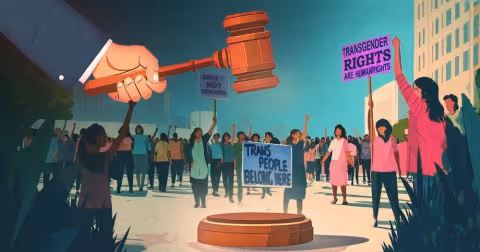
A Centuries-old Indigenous Trans Community in Pakistan is Being Attacked by Global Anti-Trans Hate

Author
Sophia-Layla Afsar

A community once linked to saints is being violently attacked locally with language and tech borrowed from U.S. anti-trans activists.

Maliha, a trans man, was threatened with being outed to his family by a cis woman in Karachi, Pakistan. This threat triggered panic attacks and led him to temporarily deactivate his social media accounts.

Maliha sought mental health support, but feared that professionals might out him. His extended family, already suspicious of his gender identity, frequently repeated anti-trans talking points. After months of receiving anti-trans content from cousins, he admitted, “I now have a lot of self-doubt about whether my transness is valid.” That self-doubt, he explained, has made him feel the need not only to prove his identity to others, but also to himself.

One recurring theme Maliha noticed in conversations with family and colleagues was their reference to Donald Trump’s statement that “there are only two genders, male and female.” To them, this was proof that “even the American government is recognising its own mistakes”, a supposed vindication of their anti-trans beliefs. After years of searching, Maliha has found a supportive therapist with whom he is working through the trauma of his transness being repeatedly invalidated.

As Pakistan’s trans rights defenders come under attack, what’s increasingly clear is that they are being targeted not just by hate, but by technologies of war repurposed for domestic repression. From digital surveillance and doxxing to psychological warfare tactics like social media humiliation, these strategies mirror the logic of counterinsurgency: aimed not merely at silencing dissent, but dismantling the safety, dignity, and very identities of those most vulnerable. For trans and nonbinary defenders, these tools are not abstract; they are lived threats that corrode mental health, isolate community, and endanger lives.

Anti‑trans panic in Pakistan

In August 2022, amidst political unrest and a worsening cost-of-living crisis, Pakistani influencers launched an anti-trans moral panic. They borrowed language from U.S. Republican rhetoric around “gender ideology” and combined it with religious nationalism, framing the existence of Pakistan’s ancient trans community as a “Western-funded agenda” meant to destroy the country’s “family system.” Globally, this language is often used to portray trans and gender-nonconforming people as threats to a so-called “natural” social order.

In Pakistan, influencers are targeting the centuries-old Khawaja Sira community (historically referred to as hijra), and accusing them of being a foreign import despite their deep roots in South Asian history and spiritual traditions. A community once linked to saints has been recast as “mentally ill” with language borrowed from U.S. anti-trans activists. This is causing a barrage of local online and offline violence against Pakistan’s trans community. But trans rights defenders are organising and fighting back. 

Though attacks on Khawaja Siras are not new — the British colonial government criminalized the community in the 19th century — what’s changed is the narrative. Anti-trans influencers began citing U.S. news reports and the Biden administration’s support for trans rights as proof that Pakistani trans identities were part of a Western conspiracy. When Trump declared “there are only two genders,” some influencers celebrated, with one podcast gloating, “Bye Bye Gender Ideology.”

In September 2022, a senator from a religious party falsely claimed that nearly thirty thousand Pakistanis had changed their gender markers under the 2018 Transgender Rights Act. Calling this a “Western cultural invasion,” he appealed to “social media activists, YouTubers, and Islam-loving young people” to upload a million videos against the law. This call to arms became a loyalty test: opposing the Transgender Rights Act was equated with being a pious Pakistani Muslim. What followed was a misinformation-driven frenzy, shaped by U.S.-style transphobia, but cloaked in Pakistani Islamic nationalism.

The panic first focused on rolling back trans legal recognition, citing false claims such as the legalisation of gay marriage. Eventually, the Federal Shariat Court struck down gender self-identification as un-Islamic in May 2023, although the judgment is currently under appeal to the Supreme Court. The campaign then shifted toward embedding transphobia in daily life: targeting women’s spaces, children’s education, and talk shows. Influencers wove anti-trans rhetoric into lifestyle content for middle-class mothers on Instagram, normalizing hate within everyday content.

Making transphobia trend

In 2022, with rising inflation and political instability, Pakistan’s urban middle class faced growing anxiety about their futures. Anti-trans influencers capitalized on these fears, packaging transphobia as a marker of elite status.

A fashion designer promoted anti-trans views while wearing her own label. A religious podcast criticizing trans people was branded with luxury motorbike imagery. These stylized expressions of hate, wrapped in high-status aesthetics, reinforced traditional gender roles. Men were shown riding expensive bikes through mountains; women, dressed in designer clothing, were told that hating trans people was how they protect their children and Islamic values. This mix of English phrases, luxury branding, and traditionalist values turned transphobia into a lifestyle choice marketed to a disaffected urban audience.

Mehloob*, a trans woman who spent nearly a decade as a trans rights defender, carefully maintained a low profile. Watching the wave of online hate grow, she observed that anti-trans bullies don’t rely on medical evidence, they target anyone whose appearance or voice doesn't conform to idealized gender norms. This includes cis women with short hair, deep voices, or athletic builds. Pakistani trolls, like their U.S. counterparts, began conducting “transvestigations”: analyzing photos or videos to “prove” someone is secretly trans. Even high-profile figures like protest leader Mahrang Baloch and actor Momina Iqbal were targeted.

Mehloob* and other names mentioned with a * have been changed to protect the safety and privacy of the source. 

In his 2018 essay The Cruelty Is the Point: The Past, Present, and Future of Trump's America, Adam Serwer said that “Their shared laughter at the suffering of others is an adhesive that binds them to one another, and to Trump… community is built by rejoicing in the anguish of those they see as unlike them, who have found in their shared cruelty an answer to the loneliness and atomization of modern life.”

Serwer’s words apply equally well to the context of anti-trans rhetoric imported into Pakistan. For example, when murders of trans women are reported online, it is all-too-common for Pakistani commenters to celebrate it as a good thing for the country. It is not the death of a trans woman, but the violence that killed her that online trolls celebrate.

Many smaller troll accounts simulated anti-trans violence or openly talked about their desire to bully trans women, often accompanying viral hashtags denying the validity of transness. However, in one video a prominent leader of the anti-trans movement pointed to an Aurat (Women’s) March poster showing a trans woman and called trans people an “agenda” that deserved “humiliation”. Comments praised the influencer’s “bravery” for “protecting Islamic values,” illustrating how cruelty is rewarded with social capital.

It has not mattered whether anti-trans influencers sneered, openly mocked or humiliated trans people, they have been praised for expressing anti-trans views. With transphobia increasingly being associated with higher social status in Pakistan, online attacks on trans people also increased. Initially replicating Trump or MAGA language calling for “eradication of transgenderism,” some Pakistani anti-trans influencers have even called for trans people to be killed.

Apps and platforms, once designed for connection, are now surveillance tools. Anti-trans actors exploit metadata, and the reach of viral content to stalk, shame, and silence. These are the tools of a digital war: not against an enemy combatant, but against people asserting their right to exist. In this war, trans activists are rendered both hyper-visible and intensely vulnerable, their every word, photo, or friendship is a potential weapon against them.

Doxxing, threats, and public shaming

Invalidating hashtags also accompanied before and after photos of trans women activists who had transitioned. Similar to an anti-trans troll tactic in the United States, “before” photos were held up as “evidence” of the “deception” of trans women, who (according to anti-trans trolls) were “men pretending to be women” to “invade women’s spaces.” Sometimes trolls deadname the trans activists, i.e. called them by the pre-transition names they no longer use, as an additional way to invalidate their transness.

Constant online harassment, hateful messages, and threats create an added mental health burden for marginalized groups known as minority stress. This extra strain, caused by discrimination and stigma, compounds existing struggles, wearing down resilience over time. For trans women and others who do not conform to idealized beauty standards, the relentless attacks do not just hurt in the moment. They deepen self-doubt, worsen symptoms of anxiety and depression, and reinforce a sense of being unwanted.

These tactics function as gendered weapons in an information war. Algorithmic amplification of hate is now mobilized against trans rights defenders by troll networks. Just as wartime psy-ops aim to disorient and demoralize, the goal here is not just visibility of anti-trans narratives, it is control, humiliation, and erasure of trans people.

Zara, a trans content creator with thousands of Instagram followers, was doxxed after beginning to live openly as a trans woman. Her schoolmates shared her pre-transition photos on WhatsApp, calling her existence an “abomination.” Though she tried to defuse the hate with humor, the bullying didn’t stop. She performed on social media using an alter ego of ambiguous gender. So long as she performed using a caricature, it offered an element of safety, as it was only when she started living openly as a trans woman that she was doxxed, i.e. her private details were leaked, endangering her safety. She eventually reduced her public presence and stopped posting content as her alter ego.

Mariam* limited her online presence after observing fellow trans women being villainized and fetishized online. She worries about the safety of fellow trans women who are more visible. She hides her face in certain public gatherings out of fear of her photos being leaked online. Mariam laments security concerns limiting her ability to share her moments of joy and celebration online. This makes her feel less connected to community and friends.

Arzu, a trans rights defender, reports increased instances of cyber harassment and digital extortion in Khyber Pakhtunkhwa province, one of the most dangerous regions in Pakistan for trans people. These include instances of extortion gangs creating fake profiles using stolen photos as well as non-consensual pornography. Similarly, one troll tactic across the country is to create group chats to coordinate threats of violence and coordinate uncovering trans activists’ personal information.

Trans rights defender Bubbles, having experienced online bullying from both men and women, describes “years of countless anxiety attacks, not knowing if I was safe when leaving my house.” Bubbles’ experience mirrors an increasingly hostile digital environment where platforms like Instagram and X prioritize engagement over safety, which results in failures to curb coordinated attacks, leaving activists vulnerable. Even before the recent content moderation rollbacks announced by Meta and X in early 2025, using the platforms’ reporting features did not result in the removal of anti-trans content in most cases. This was even more so the case when the content was in Pakistani languages.

Like Maliha, Bubbles has been wracked with self-doubt. While she knows the importance of her advocacy, the words of trolls torture her thoughts: tone it down, be less outspoken, be less visible. She finds herself “desensitized” to threats after receiving them for 4 years but acknowledges that “not everyone is able to deal with it in the same way.” Despite years of anxiety from relentless threats, Bubbles continues her digital and offline activism.

Zanaya, a trans rights activist, was followed and nearly assaulted after giving a TV interview. She received blackmail threats warning her not to go to the police. Then a second attempt was made to assault her. She described fear and hypervigilance about being followed, leading to her temporarily reducing her public engagements. Despite the trauma, she later joined the Punjab Police as a Victim Support Officer for trans people, after offering volunteer guidance when the department began setting up facilitation centres for vulnerable populations in 2023.

Survival amongst inadequate mental health support

Pakistan’s mental health infrastructure is deeply lacking. Many professionals are untrained in working with marginalized populations and some actively engage in conversion therapy, a practice proven to be harmful and ineffective. One young trans woman was forcibly institutionalized in a “rehab centre,” where licensed professionals used violence in an attempt to “cure” her. Her story circulated online, until she was forced to take the videos down.

Even professionals who call themselves “trans-friendly” often fail to provide clear, informed practices, creating mistrust among trans people. As a result, trans people are forced to be creative. Many turn to peer support systems: informal conversations with friends, peer-led mental health groups, and community spaces that offer more empathy than formal care. However, this burden is heavy. Many trans people remain silent, afraid their mental health struggles could be weaponized in intra-community politics.

Minority stress takes both tangible and intangible forms: ranging from direct threats to the daily emotional toll of seeing one’s existence framed as a political “debate” or “ideology.” Even when trans people reduce their visibility to avoid immediate danger, the psychological impact of living in a hostile environment lingers. Depression, anxiety, and PTSD are common. Affirming care, both socially and medically, has been proven to improve mental health outcomes. But such care remains scarce.

These are the effects of psychological warfare. When defenders cannot trust health providers, fear being digitally tracked, or experience threats, the line between social repression and personal trauma blurs. The war on trans rights is no longer metaphorical, it uses the same architecture of control: coercion, fragmentation, and targeted destabilization of emotional well-being.

While the imported anti-trans panic continues to wreak havoc in Pakistan, we cannot remain passive observers. We must 1) demand social media companies implement proper content moderation to stop anti-trans bullying and harassment, and 2) support trauma-informed trans mental healthcare that rejects traumatising conversion efforts. Share resources, contact policymakers, and amplify trans-led solutions.
 

How India Weaponises Kashmiris Against Kashmiris

Author
Rayan Naqash, Pallavi Pundir

DEK: In one of the world’s most densely militarised zones, surveillance is not just omnipresent, but is forcefully outsourced to its very own residents—deepening gendered repression and placing women defenders under a digital microscope.


Salman* was updating his shop’s inventory, as he did every morning, when he was summoned at a police station in Srinagar, the capital city of Indian-administered Jammu & Kashmir. There, dozens of other small business owners were ordered by the station’s police chief to install CCTV cameras outside their shops in April 2023. Crime has been rising since 2019, they were told, and this was for their safety and their businesses’ security. When Salman and others weren’t convinced, the police chief’s tone changed.   

A CCTV system for a business establishment costs upwards of INR 30,000 ($344) in local stores, excluding the cost of power backup systems, which they would need since authorities had ordered 24/7 surveillance.


“He told us that they would beat us up if we didn’t follow orders,” Salman said. Eventually, the traders were given a concession: They could pool in money and install a common CCTV system. After the mass summon, Salman said, policemen routinely visited markets to inspect installations and adjusted camera angles towards roads instead of the shops. If they questioned the cops, they faced abuse.


Salman, and other Kashmiris interviewed in this piece marked with an *, are identified with pseudonyms to protect them from reprisals from authorities.


Although formal orders issued by the bureaucratic administration lay down criteria for data retention for up to 30 days, Salman said they were anxious. “What if we don’t have the footage they need [from a month ago]? They will just break our backs,” Salman said.


In Kashmir, the monitoring of public posts alone has led to several detentions and arrests in recent years, mostly under vaguely drafted and open-ended provisions such as the Public Safety Act and Unlawful Activities (Prevention) Act.


Mir Urfi, a woman human rights lawyer in Srinagar, is one of few Kashmiri lawyers willing to represent those accused under India’s stringent Unlawful Activities (Prevention) Act, a majority of whom are from India’s only Muslim majority state.


She said the creation of the surveillance state is justified by classifying Kashmir as a “disturbed area,” adding that the police begin their investigations by collecting digital evidence, mainly cell phone locations, and CCTV footage collected from shopkeepers like Salman.


The outsourcing of surveillance—including its cost—to civilians isn’t legal, Urfi, the human rights defender and lawyer said, but Kashmiris have no choice. “Civilians can move the courts, but people don’t do so because at the end of the day, they again have to face the police, and there is an environment of fear created by the police. Our right to exist is at stake, so things like privacy don’t matter so much to the people,” she said. “ Survival takes priority.”


For women human rights defenders in Kashmir, technologies of war—particularly digital surveillance—have been re-engineered to operate as intimate tools of intimidation. Not only are their public actions monitored, but their private lives are dissected under the state’s algorithmic gaze.


Digital surveillance has been a part of Indian Prime Minister Narendra Modi’s nationwide programme called Digital India since 2015. The scheme, aimed at turning the world’s most populous country tech-savvy and crime-proof, is reminiscent of 19th-century colonial playbook, which has since evolved from targeted surveillance to mass surveillance. Under Modi, India became the world’s second-most surveilled country, with over 1.5 million CCTV cameras in 15 cities, according to UK-based cybersecurity and privacy research firm, Comparitech. There is no statistical correlation between CCTV cameras and crime reduction.


Vasundhara Sirnate, an Indian political scientist and journalist whose work looks into surveillance across India’s conflict zones, calls the security apparatus in Kashmir an “architecture of oppression.” Surveillance here is layered, she said, and is a mix of physical surveillance and digital surveillance. Apart from CCTV cameras and phone tapping, the digital panopticon gets more granular each year as online spaces are heavily policed. “The surveillance network has entered people’s homes,” Sirnate said, “which exacerbates the level of distrust that’s already deep-seated in the region because there’s a constant sense of being watched.”


In Kashmir, digital surveillance has little to do with crime. The region has been a flashpoint between nuclear-armed India and Pakistan since 1947. The two countries fought two wars for full claim, but control parts of it. China too controls a portion of the territory in the east.


India deploys an estimated half a million soldiers here – with the number reinforced by up to a million more in times of need – making Kashmir one of the world’s most densely militarised zones. Surveillance is interspersed with not just India’s security measures but also a history of armed resistance. Clashes between Indian security units and militants have claimed tens of thousands of lives, mostly civilians. Human rights watchdogs have documented violations by Indian security agencies such as enforced disappearances and torture. In 2019, India revoked Kashmir’s semi-autonomous status, downgraded it to a union territory and brought it under federal rule until October 2024. There has been nominal local representation since then, but the federal government continues to control the police and armed forces deployed here. In the meantime, violence continues, as does the intensification of India’s militarised infrastructure, of which surveillance – both physical and digital – is a key part.


Salman’s experience speaks to the distinct nature of surveillance in Kashmir. In a landscape dotted with security personnel, the Jammu and Kashmir Police reportedly installed over 1,000 CCTV cameras since 2010 citing infrastructure boost and safety. In 2022, orders mandating business owners to install CCTV cameras added a dimension of enforced communal surveillance that gives civilians no option but to become active members of the surveillance state, in which they have barely any say or representation. Indian security agencies, which operate in the grey area between law and national interests, prioritise “interests of the state” over fundamental rights.


“The ultimate aim of this surveillance is, no doubt, control,” said Srinivas Kodali, a hactivist and researcher who advocates for transparency on technological systems. “The kind of control that dictates [surveillance], right now, is a Hindu majoritarian order.” Kashmir is the most populous Muslim-majority territory in Hindu-majority India, where the rapid rise of Hindu nationalism

dictates even national security. “There are fundamental rights assigned to mainland Indians – like the freedom to access information, or to move – but not to Kashmiris, thereby converting them from citizens with rights, to controlled beings who are subjects,” said Kodali.

The making of India's omniscient watchtower

The story of India’s surveillance systems, estimated to be a $2.5 billion industry, goes parallel to the rapid rise in penetration of internet and smartphones in the country. India’s digital economy is growing at twice the rate of its overall economy, said a report by the Prosus Centre for Internet and Digital Economy. The country is home to the world’s second-largest digital population, estimated to be 806 million active digital users, as of February 2025.


But India’s digital success comes with draconian control over its access, use and privacy, especially for the 12 million residents of Jammu & Kashmir.


Ninety-seven percent of Kashmiri households have a phone, according to the Netherlands-based Global Data Lab, while 58.8 percent of them have internet access. About a decade ago, the penetration of mobile phones and internet here was already higher than the national average. Moreover, the region’s close-knit societies and still-existing communal spaces ensure organic spread of information through word of mouth.


But, unlike the rest of the country, Kashmir’s digital spaces are deemed by the Indian government as a breeding ground for terror, misinformation, and secessionism. Restrictions on 4G or social media apps are common. In 2019, India imposed the world’s longest internet shutdown – lasting 552 days – in Kashmir, adding to the region’s count of a total of at least 849 internet shutdowns since 2012, the highest in the country.


Technological surveillance came into prominence in Kashmir after New Delhi allowed mobile phone services in the region. While mobile telecommunication was launched in India in 1996, it was disallowed in Kashmir until 2003 citing the Indian Army’s apprehension of its use by militants. As technology improved, New Delhi sought to increase mobile tower density in the region to track militants. Government forces have questionably free access to tower dumps and detailed phone records of citizens.


By the late 2000s, social media was dominated by politically-charged youth and the use of encrypted messaging apps prompted authoritarian intrusions into cyberspace.

Threat to life arising out of forced surveillance isn’t new. In 2015, militants began a campaign against telecommunication towers, killing at least two civilian landlords on whose properties the towers were established. Within a short span, more than a third of Kashmir’s mobile towers, particularly in the northern districts, were taken off the grid. The campaign was a bid by militants to escape surveillance.


Still, the situation is a double-edged sword for Kashmiris caught in the crossfire. The forced conscription into the state surveillance project has made civilians vulnerable to harm from any side – government forces or militants – whose wrongdoing, if caught on their cameras, makes them liable to be presented as witnesses in court. “In a conflict zone, it is easy to brand anyone as a militant or an informer, and both sides get an easy justification to target civilians—militants can kill someone accused of being an informer and [government forces] will kill who they think is a militant,” Urfi said.


The surveillance database includes the police survey, which was conducted door to door and also enforced upon mosques across Kashmir last year. The survey included questions ranging from phone numbers, vehicle numbers, possible links to militants and record of overseas travel, to the number of CCTV cameras installed at home. The year before that, the municipal corporations in Srinagar and Jammu created GIS-based surveys of all households by assigning QR-coded Digital Door Numbers to facilitate civic programmes. Geo-tagging homes is a part of Modi’s Smart City project and is embraced by a majority of Indians outside Kashmir. For Kashmiris, these initiatives, carried out to “systemise” citizens’ records, tie in with the surveillance, intimidation, and profiling of the residents.


“Surveillance doesn’t just criminalize and control bodies and information in Kashmir, but is also connected with a history of psychological warfare against Kashmiris,” said Saiba Varma, the Associate Professor of Psychological/Medical Anthropology at the University of California San Diego and author of The Occupied Clinic: Militarism and Care in Kashmir. “Kashmiris know this isn’t an ordinary conflict. It’s a war on their psyches, on what they’re supposed to think, not think or might think in the future.”


There is no official record of the scale of digital surveillance on civilians in Kashmir, except press trips organized by the Indian Army to showcase border surveillance, or the Jammu and Kashmir Police speaking to the press about using tools such as the Internet Protocol Detail Records.


“I don’t think anybody knows [the scale of surveillance in Kashmir] because they’re all black ops at the end of the day,” said Kodali.


Meanwhile, the awareness of surveillance in the region – and people’s own assumptions about the extent of it – has created a deafening, self-censoring environment.

Kashmiris navigate occupation and infiltration on social media  

In 2020, Showkat* was summoned to the cyber police station for posting about an extrajudicial killings of three young men that year in Kashmir’s Shopian district by the Indian Army. The killings were passed off by the Indian Army as an “encounter” or gunfight with “terrorists” but was later proved to be false.


“Before 2020, I, like any other Kashmiri, used to post about every issue in my region,” they said. That day, they were summoned – without warrants – by security officials who read out their tweets and asked them about their “ideology,” family background, and education. They were let go and told not to post “political matters.” Showkat notes that their case was a part of a “mass social media crackdown” that year. Today, they add, most Kashmiris don’t use their real identities – or post news – online for fear of being tracked and summoned.


Social media monitoring has become a common feature of Kashmir’s security measures. It trickles down to checkpoints, too, where military personnel order people to hand over their smartphones and PIN to check photo galleries, social media accounts, chats and recently-deleted apps. Use of open source apps such as Telegram and Signal evoke suspicions and interrogation.


Showkat claims that an Indian Army official once installed an unknown app onto their phone during a cordon-and-search operation, a once-discontinued feature of Indian Army’s “anti-terror” operations, in an attempt to monitor their phone. “Indian Army officers also add their numbers on peoples’ phones, through which they send directives to upload pro-Army and nationalist photos and messages on their online status,” Showkat said. There’s already an official order that manages the social media presence of Kashmiri government employees. A covert operation to take over civilians’ social media accounts hasn’t been reported by news outlets or admitted by security officials.


Showkat adds that social media platforms now elicit deep fear among people. “Everyone operates on the assumption that there’s some kind of infiltration,” they said.


For human rights defenders and journalists, the control is more pronounced.

Silencing women journalists and human rights defenders

K*, a senior Kashmiri journalist, said security officials use journalists’ digital presence to dissect private lives, from everyday movements to information on their families, during summons. This often means endangering sources or personal privacy. At least 13 Kashmiri journalists have been detained since 2019 – a quarter of all journalists imprisoned in India, as tracked by Reporters Without Borders – under charges of terrorism, including for social media posts such as videos of protests.


“It’s a project of silencing, this digital monitoring of the public,” K said. The Jammu and Kashmir police maintains a well-equipped social media monitoring centre, manned by dozens, in its CID headquarters in Srinagar. “Even likes and comments are monitored. The digital space in Kashmir is as occupied [by soldiers] as the physical space.” 
 

P* said women journalists are especially forced to keep their profile low because the intimidation uses their gender identity to silence them. “Once, security officials entered my neighbourhood and started asking around about me. In a small community, people start to wonder what I’ve done wrong. Security officials treat people of my gender as if it’s a weak spot to shut us down,” P said.


B*, a woman human rights defender, attests to this experience and said that she self-censors whenever she feels the urge to speak up because of the consequences it would have for people related to her. I couldn’t bear the thought of my family being harassed or questioned for it. For B, the surveillance came in the form of targeted harassment after she published a report on human rights in 2023. Soon after, she was inundated with phone calls from unknown numbers, often officials, asking “bizarre and intrusive questions.” “After repeated 10-20 calls a day, I switched off my phone for three months,” she said. “Every time I would turn it back on , the tirade of calls would continue. Eventually, I was forced to leave Kashmir.”


Digital surveillance also acts as a character certificate based on social media activities, journalism or work on human rights, which makes its way into the files of the CID. There, Kashmiris’ fates are decided: Whether they’re allowed to fly out of India, or fly in.


Many Kashmiris now hide behind VPNs while accessing social media platforms as security officials crack down on what they deem “false and malicious” posts. Big Tech platforms, too, have complied to shut down vocal Kashmiris. Apart from removing hundreds of thousands of Kashmir-related posts – including SOS messages – tech platforms actively collaborated with police by giving them access to IP addresses. In recent years, news outlets reported on tech platforms’ collusion in enabling alleged pro-Indian Army disinformation campaigns and targeting of Kashmiri journalists.


The press censorship is exacerbated by internet shutdowns, forcing Kashmiris to use government facilities to communicate during 2019, or adhere to government or police narratives to protect themselves. Anuradha Bhasin, who runs 70-year-old Kashmir Times, one of Kashmir’s oldest English-language newspapers, said surveillance of journalists existed in the 1950s too when her father started the newspaper. “Things worsened during the 1990s when both the state and non-state actors used guns to create fear. But the fear still wasn’t deeply embedded,” she said. “But when the intimidation enters the digital space, its hidden nature amplifies the fear.” Bhasin faced closure of her office in 2020. Now based in the US, the journalist is working to revive 20 years worth of Kashmir Times’ editions, which, she said, mysteriously disappeared online in 2021.


“Surveillance as a tactic has yielded huge dividends for the state. The flow of information [from journalists] has significantly dried up,” said K. “For us, it's a significantly disabling scenario: When you have full information but no attribution, it goes unreported. Our work, reported after due diligence, remains only for the sake of the record. This gives the government full narrative control.”

Trauma from chronic surveillance

A 2015 mental health survey conducted by Médecins Sans Frontières and Kashmir University, revealed that nearly 45 percent of Kashmiri adults – nearly 1.8 million – show symptoms of depression, anxiety and PTSD. “On average, an adult living in the Kashmir Valley has witnessed or experienced 7.7 traumatic events during their lifetime,” the report said.


A key contributor to the trauma is chronic surveillance.


Showkat, the university student, said they’re perpetually stressed because of their inability to share. “Self-censorship creates immense psychological pressure,” they say. “Even if somebody is assaulted or beaten to pulp, nobody talks about it. If journalists come to interview us, nine out of 10 people refuse to speak to them. People don’t even talk to their own families.”


B’s experience of targeted surveillance, too, made her chronically anxious. “It’s not just about monitoring; it’s about control,” she said. “What this does is you start second-guessing everything – your words, calls and even the ones you interact with online. It’s exhausting, both mentally and emotionally.”


Varma, the anthropologist who surveyed Kashmiris’ mental health, said the forced conscription into the surveillance apparatus is a strategy to weaponise Kashmiris’ communal bonding and isolate them. “There is a cycle of chronic mistrust and isolation,” said Varma. “The curative practice is usually to share, interact with people. Inability to do that drives more alienation. That level of suspicion in psychiatry is called hypervigilance, which is what happens after trauma. Over time, it erodes your physical, cognitive and nervous systems and has far-reaching impacts on people’s well-being.”


In 2022, P, the journalist, visited a doctor – not a therapist – seeking professional help for a burnout arising out of professional challenges. “We didn’t have reliable resources so I went to a medical doctor for help. Even then, I couldn’t share what I was going through,” she said. Today, she said, that space to seek help has shrunk further. “I can’t trust sharing my information with a doctor because of widened trust issues.”


B said that for Kashmiris, coping with all forms of surveillance isn’t easy. “I isolated myself, stopped using my phone for some time completely, avoided sharing anything online and even limited my circle. It feels safer this way,” she said. “Over time, I’ve tried to find strength in sharing with other journalists here. That sense of shared experience has helped, even if just a little. But I can’t say I have fully found a strategy to cope, it still feels heavy most days.”


News outlets report that the number of Kashmiris seeking mental health support is rising, but the larger populations’ symptoms remain untreated. Another 2017 study by the Doctors Association of Kashmir found that stress has sent journalists into a cycle of ailments such as hypertension, diabetes and fatty liver. Varma adds that institutions of care in Kashmir have previously been used by the state to surveil Kashmiris, especially during uprisings. “In conflict zones, they’re not neutral and safe spaces,” she said.


The silencing and censorship is key to the Modi government’s “Naya Kashmir” campaign – or “New Kashmir” under Modi’s rule – which claims that “peace” is restored after bringing the region under Delhi’s control in 2019.


Urfi, the lawyer in Srinagar, said Kashmiris have given in to the omnipresent surveillance. And even though it means letting go of their privacy and the constant challenge of ensuring client’s confidentiality (by opting for more frequent in-person interactions), “I have left it all to Allah; whatever has to happen will happen anyway.”

Navigating War: Women Human Rights Defenders in Lebanon After Strikes on Journalists and Hezbollah

Author
Justin Salhani & Pallavi Pundir

With technology weaponized against them, Lebanon’s women human rights defenders are finding creative ways to support an estimated 520,000 women and girls displaced by war.

Yumna Fawaz was asleep when a thunderous blast jolted her awake.

She was in Hasbaya, a mixed-faith town in southern Lebanon, on October 25, 2024, with 17 other journalists and media workers covering the intensifying conflict between Israel and Hezbollah. “We were the last group there,” Fawaz recalled. “We were headed to the frontline.”

At 3 a.m., a missile strike hit their location. “For a second, I thought I was dead,” she said. The ceiling was gone, Israeli jets roared overhead, and around her lay dismembered bodies. “Legs, parts of bodies, pieces of meat,” she said, struggling to describe the carnage.

Then came another strike. As chaos unfolded, Fawaz made a split-second decision: she went live on air. “As journalists, we prefer to die while working,” she said. She continued broadcasting until 8 a.m., when it was finally safe to emerge from the rubble.

A location-targeted night of horror

Fawaz is one of the survivors of the deadliest attack in Lebanon in ongoing aggression by Israel. The October 2024 attack killed Ghassan Najjar, a cameraman; engineer Mohamed Reda from the news channel Al Mayadeen, a pro Iranian outlet; and cameraman Wissam Qassem from Al-Manar, Hezbollah’s media channel. Three others were wounded. “I’ve covered many wars in my lifetime, in Syria, Iraq, Yemen and so on,” she said. “But this was different. Israel knew what they were doing. They used new technology and attacked with weapons made by the U.S. To kill journalists while they’re sleeping – this was a whole new level of barbaric. This attack showed that unlike the previous wars, there is no red line with this one.” 

With Israel’s war on Hezbollah escalating in Lebanon and technology increasingly used to target individuals, women human rights defenders and journalists are operating under unprecedented danger. Facing threats from both foreign aggression and domestic political forces, they are navigating surveillance, displacement, economic insecurity, and mental trauma while trying to protect and support over half a million displaced women and girls. But women human rights defenders in Lebanon are surviving—and resisting—amid a collapsing system.

Technology as a weapon: Israel’s escalating strategy

The attacks shook the journalist and human rights defender community in Lebanon, not only altering the behavior of media outlets and human rights defenders, but also how the war is or is not responded to. “[The attack] was a huge deterrent,” Jonathan Dagher, who leads the Reporters Sans Frontiers (RSF) Middle East Desk said. “It was understood as a very clear message that no one is out of bounds. They will be targeted, directly and almost without hesitation.”

Alongside its war on Gaza, which has been on since October 2023, Israel’s attacks in Lebanon escalated into an all out-war last September when it carried out waves of airstrikes and covert weaponized pager and walkie-talkie attacks targeting Hezbollah that killed 39 in homes and public places and wounded more than 3,400. Two Western security sources said Israeli intelligence agency Mossad spearheaded the pager and walkie-talkie attacks.In the pager attacks, Israeli forces used an advanced AI tool called ‘Habsora’, which maintains a “target bank” that catalogues Hezbollah operatives and their locations. This created an even bigger fear  that personal devices used for crucial communication could be made into killing machines. 

The fighting has killed over 4,000 people in Lebanon since October 2024, and the war in Lebanon has displaced an estimated 520,000 women and girls, according to UN Women, which added that 12,000 families that were displaced are headed by women. Human rights organisations note that the conflict has been specifically deadly and disruptive for media workers and women human rights defenders, who’ve faced increased challenges with using or trusting technology, since technology itself has been weaponized. Lebanon’s women human rights defenders are finding ways to support communities, despite the targeted threats to journalists and Hezbollah. 

Dangerous access, heightened risk for women

One of the biggest challenges for human rights defenders and media workers while working during a war, said Ramzi Kaiss, a researcher with Human Rights Watch (HRW) with a focus on the Middle East and North Africa division, is access, and women have faced more barriers than men.

“Access is key because it’s needed to build the facts,” said Kaiss. “What we saw during the last war, particularly the escalation, was that there were warning signs for people who work on documenting violence, that if you’re documenting what’s going on in the ground, you may become a target.” 

Kaiss has been a part of multiple HRW investigations documenting Israel’s targeted technology-driven location attacks on media and aid workers in Lebanon in the last 15 months, including the one that killed Najjar, Reda and Qassem last October. Israel has consistently denied HRW’s investigations, calling them false.

Ramzi said that the risks in a war are often compounded when it comes to women, be it in journalism, or human rights or any other field. “In a country like Lebanon, where, already in peace times, there exists discriminatory laws against women, especially ones that don’t protect them from physical and sexual abuse, reporting on war becomes even more challenging for women,” said Ramzi.

Women and the war’s toll and trolls

Women media workers in Lebanon have historically faced discrimination and harassment within close quarters, especially the Lebanese political parties. The recent past has seen Lebanese women journalists being compelled to flee the country, or being imprisoned for their work. RSF’s press index places Lebanon 140th out of 180 countries in terms of press freedom. The media industry in the country already has gender bias.

A report released this March, Maharat Foundation, with the support of UN Women (Lebanon) and the French Embassy in Beirut, further found that women journalists and human rights defenders working in the frontlines are increasingly facing cyber violence. A jarring example of this emerged after Lebanese-Syrian journalist Alia Mansour was detained by the Lebanese police on October 19, 2024, for a few hours after a social media account impersonating her allegedly interacted with Israeli counterparts. Lebanese law prohibits citizens from interacting with Israeli citizens.

Another report by the Committee to Protect Journalists found “dozens of social media posts” targeting local media outlets by asking for a ban on them, or burning down their news studios. Some of the outlets attacked had aired pieces that many locals deemed insensitive or provocative. The Lebanese government has also had a record of weaponizing criminal laws to crack down on independent media outlets. “The idea [behind these moves] is to silence journalists and human rights defenders and stop reporting on violations or allegations of violence or financial mismanagement or corruption,” said Ramzi.

Elsy Moufarrej, a human rights defender and journalist, is the coordinator for the Alternate Press Syndicate, which has worked with multiple media and humanitarian organisations such as the RSF to provide protective gear to Lebanese media workers headed to the frontlines. She notes that apart from facing daily assault by the Israeli targeted attacks, there are numerous pressures in Lebanon itself.


“There was the issue of media houses not providing insurance, while freelancers faced issues with press accreditation and identification,” she said.


Early this year, Moufarrej’s work to support media workers got her dismissed from MTV Lebanon, where she worked as a content producer and debate and advocacy coordinator. Her dismissal came for her union work, which, in this case, was a statement by the syndicate that criticised MTV Lebanon for getting women journalists arrested because they accused the company of allegedly providing information that could have potentially helped the Israeli military. Moufarrej, according to local news reports, was asked to either retract the statement, or resign from the syndicate.


Moufarrej said she now faces a smear campaign over her dismissal. “This has made our work to support journalists really hard,” she said.


Maharat Foundation, in a report last year, further noted the role Israeli propaganda played in its psychological warfare in Lebanon alongside its military tech, by using digital platforms including X to push manufactured or biased information for Lebanese civilians. The report found several lapses by Lebanese media for falling for Israeli propaganda. At the same time, Western newsrooms such as CNN, ABC and NBC embedded with the Israeli military to cover the war, raising questions not just about its ethicality, but also its impact on Lebanese journalists. “Local journalists who worked with these newsrooms were assumed to support Israel too, and its occupation,” says Moufarrej, adding that the same was assumed for media institutions controlled by Hezbollah.

Besides problems from the state, women face their own challenges with Hezbollah. “We had reporters who had trouble reporting in areas governed by Hezbollah,” Moufarrej said.

Operating under Hezbollah’s shadow

Hezbollah’s power and influence in Lebanon has led to the Shia Islamist militia and political group being labelled as a ‘state within a state.’ Hezbollah was founded in 1985 with financial support from the Iranian Revolutionary Guard Council (IRGC) in response to Israel’s invasion and occupation of southern Lebanon. Over the years, the movement became the country’s most prominent representative of the Shia community, partially due to its effectiveness in fighting Israel and partially because of its authoritarian nature. The group used violent tactics to subdue opponents, including alleged assassinations, until it came to monopolize the resistance to Israel.

The party, however, also drew intense fealty among its support base. Its popularity grew, in Lebanon and the entire Middle East, after the liberation of south Lebanon from Israeli occupation in 2000. It also ran social and political services, like healthcare to supporters and running a media office.


For years, journalists and human rights defenders wanting to report or work in areas where Hezbollah is present required accreditation or authorization from the party. These areas include almost all parts of Lebanon that are predominantly inhabited by Shia Muslims, including Beirut’s southern suburbs, large swathes of southern Lebanon and the Bekaa Valley in the east.


During this latest war, that meant to cover events in south Lebanon, journalists needed accreditation from Lebanon’s Ministry of Information, the Lebanese Army, and Hezbollah, and human rights defenders needed to check in with Hezbollah, which was rightly paranoid after the deadly pager attacks.


At times, getting answers from Hezbollah was difficult as their point press person was so reportedly inundated with calls and messages that many went unanswered. This led to many journalists going to cover events without Hezbollah’s permission.


Hezbollah doesn’t appreciate that in the best of times. But after a two week period in late September 2024 that saw hundreds of electronic devices explode, an intensification of aerial Israeli attacks that killed more people in Lebanon in any single day since the end of the civil war in 1990, and the assassination of a number of top Hezbollah leaders — including their longtime Secretary General Hassan Nasrallah, the group’s fears were existential.


“We seem to be living in a Netflix series or in a dystopia,” a political analyst said at the time.


Jad Shahrour, Communications Officer at Samir Kassir Foundation, which focuses on press freedoms in the Middle East, said Hezbollah detained some foreign journalists and confiscated mobile devices, sometimes only returning them after a few days.


Analysts and media reports suspected Hezbollah had been infiltrated by spies or agents and the group became more frantic in its treatment of the press.


The journalists that were detained “refused to go public because they wanted to keep covering” the war, particularly in areas where Hezbollah has a presence, Shahrour said.


“The whole process is wrong,” Shahrour said. “There should be a call centre or a hotline that gives accessibility fast and online. It’s not acceptable that a fixer has to go to the army, Hezbollah and the ministry.”

The unequal fight for access

Many journalists hesitated going south while rising insurance costs made deploying reporters too expensive for many outlets. “Independent journalists stopped going [to cover the south],” Dagher said. “Global media outlets and big agencies started to think twice and took a lot more precautions.” This, Daghar adds, is intentional. “The intention of the Israeli forces to impose a media blackout on the conflict zones was clear from the get-go,” he said. “There was also an intention to impose a blackout on the south, and for a while it worked.”


Angie Mrad, an Emmy-winning freelance journalist and producer from Lebanon found her status as a freelancer highly disadvantageous when she couldn’t get proper accreditation. At one point, she was filming in a private citizen’s home when a local politician’s henchmen burst in and temporarily detained her colleague who was filming. Mrad has since had multiple meetings with the Information Ministry in the hopes of obtaining rights for freelance journalists but, “it was extremely difficult for journalists to work during the war and obtain the necessary permissions.”


Moufarrej, from Lebanon’s Alternate Press Syndicate, lists the many ways the war specifically impacted women media workers, especially in the form of displacements. There’s one case, she said, where a woman journalist was forced to move into her former husband’s house after getting displaced, which has been very triggering for her and her daughter. The journalist told Moufarrej that she works from her car in order to do her work. Some journalists, she added, face rent-gouging from landlords while one journalist faced rental discrimination for being a Shia Muslim. Yet another slept on the streets after being displaced in the south. These cases found support from the Alternate Press Syndicate but Moufarrej said that the scale of impact especially on women reporters is unfathomable. “These journalists have to work no matter what situation they’re in,” she said.


Kaiss, from HRW, said that the risks during this time extends beyond the human rights defenders and journalists too, to those who help them document war crimes.


“We’ve documented the targeting of medical workers and teams who were interviewed by us. By the time we published our report, they had unfortunately been killed in targeted attacks,” he said. The Lebanese Ministry of Health found that between October 2023 and November 2024, the Israeli military attacked 67 hospitals, 56 primary healthcare centres and 238 emergency medical teams. At least 222 medical and emergency relief workers have been killed in those attacks. In March this year, Amnesty reiterated the killings as war crimes and demanded the International Criminal Court to investigate.

The silent mental health crisis

The scale of the war, the burden of their work and the killings of their peers and family have placed an unimaginable trauma on many survivors.


Fawaz can’t stop reliving the scene from October 2024. “One day, I woke up in my house in Beirut after hearing a huge sound of bombardment,” she said. “I took my phone and hurried to my window to look outside. There was nothing. It was all in my head.” The journalists and human rights defenders APC spoke to in this report couldn’t respond to how they protect their own mental health while documenting the war.


Moufarrej said that the biggest impact she’s had from her work is on her mental health. “I’m a single mother and I have a nine-year-old daughter. But dealing with the traumas of my colleague doesn’t go down easily. There’s no time to grieve even when we see everyone around us fall one by one. It’s not been easy.” 

Theatre as resistance and healing

Farah Wardani, who interperses social activism and theatre at her studio called Laban in Beirut, said that working with internally displaced persons during this conflict, especially in the south, brought forth a critical message that there’s the dire need to address the impacts on women. “In a conflict situation, women and children are the most vulnerable,” she said.


“Usually in times of crisis, women are the primary caregivers and they have to stay strong for the rest of the community. In my country, it’s an ongoing series of wars, violence and financial crisis, and these women do so much to not just survive but also to keep their families and communities together. You see an entire generation of women suffering from burnout and trauma, where they don’t have the time to breathe and reflect.”


Wardani lost 15 family members in south Lebanon during the full-scale war last year. “My own children are afraid; some from my crew have spent nights on the streets after being displaced. I’m in therapy myself, as are all my team members. But we can’t stop. Trauma kills one’s imagination and sense of reality. It’s important for me to be around my community.


Wardani and her team at Laban have been conducting theatre workshops and other forms of expressions to provide women a way to express themselves, while also focusing on children in order to “provide a space for women to rest.”


“We are witnessing what’s happening in Gaza and there is a deep fear in Lebanon that we will become like Gaza too. There’s a lot of unexplained anger, a feeling of unfairness among those affected by the violence,” said Wardani. “But we’re also witnessing how, despite facing so much, women are natural peace builders and act as psychologists by handling the emotions of everyone around them. We can’t stop now.”


And that’s how Fawaz feels too. “I feel like I’ve been killed many times,” Fawaz said. “But when I think of how I can survive this, I say that I’m not a victim – I’m a survivor. And I want to tell our story to the whole world. If nobody talks about this, there will be no accountability.”

Editorial: Beyond the algorithm: Weaponised technologies and human rights under digital siege

Author
Sadaf Khan

Across conflict zones and fragile democracies, technologies once imagined as tools of empowerment and exploration, now serve as instruments of surveillance, repression and even killing. A series of investigations exploring the use of technology against Women Human Rights Defenders, WHRDs, in conflict-affected states of Ethiopia, Kashmir, Lebanon, Pakistan, Sudan and Venezuela  demonstrates how technologies, whether simple or advanced, are repeatedly weaponised against the defenders. The similarities in the patterns of technology facilitated violence, across these states, are not incidental. These are intentional and structured through state policies, security doctrines and corporate designs driven by profit and capitalist greed. Armed actors then take these systems further, deploying them as tools of intimidation, oppression and direct violence.

In Ethiopia, conversations are intercepted, leaked and manipulated to silence and stigmatise. In Kashmir, civilians are conscripted into operating surveillance systems that erode privacy and intensify scrutiny of women defenders’ lives. In Lebanon, Israeli forces have deployed AI-driven targeting to strike journalists and defenders, erasing the civilian–combatant distinction. In Pakistan, trans defenders are exposed to digitally amplified hate, doxxing and public humiliation rooted in imported anti-trans narratives. In Sudan, the Rapid Support Forces have enforced long blackouts and monopolised satellite connections, severing defenders from their networks. In Venezuela, laws and applications criminalise dissent and invite communities to report each other, with women defenders singled out for gendered harassment and stripped of the ability to move freely.

Taken together, these contexts reveal a common pattern: technologies are weaponised in places where defenders are already vulnerable, amplifying risks and leaving women with no effective protection or legal recourse. Surveillance, digital harassment, blackouts and targeted strikes are not isolated incidents but part of a broader trend where tools meant for communication and connection become instruments of control. For WHRDs, the consequences are compounded by gendered stigma that transforms political dissent into personal attack. In each case, accountability mechanisms are either absent or inaccessible, meaning the very structures that should safeguard rights are those through which violations are enacted.

During the last few years Israel’s conduct in Palestine and across MENA illustrates the most severe and the most systematic convergence of military technology and systematic violations of fundamental human rights. The systematic targeting of journalists and WHRDs, the large-scale displacement of women and girls, and the use of AI systems to catalogue and strike individuals reveal a pattern of deliberate harm. The attack in Lebanon through pagers demonstrates the reach of this genocidal state across the whole supply chain fueling technology. The use of digital tools in this context, where communication devices are turned into instruments of death, underscores how technologies built for civilian use are reconfigured as weapons of war.

It is extremely challenging to document the layered threats across technological systems due to the opacity around their design. And regulating these tech developments is another mammoth challenge. Technological systems operate across borders and jurisdictions, while the international legal system remains slow, in effective and ill-equipped to address harms that are transnational, rapidly evolving, and embedded in both corporate and state infrastructures. The persistent challenge of regulating structured disinformation, aimed to create harm against individuals is another illustration of this challenge. It has been one of the earliest and most pervasive forms of tech weaponisation, yet efforts to create legal protections against it are constrained by overlapping problems: the risk of states abusing regulation to silence dissent, the dominance of a handful of technology companies whose presence cuts across national boundaries, and the imposition of moderation standards shaped primarily by Western models. These dynamics leave defenders, especially WHRDs, exposed to layered threats without accessible pathways to justice and remedies.

In essence, across contexts, technologies are repeatedly integrated into systems of control and repression, often without effective safeguards or oversight. For WHRDs, the risks are compounded, as political dissent intersects with gendered violence and stigma, making them disproportionately exposed to surveillance, harassment and attack.

On paper, and in the corridors of the UN, there is recognition of these dangers. The UN Secretary-General has described Lethal Autonomous Weapon Systems as “morally repugnant” and called for a binding treaty by 2026. The General Assembly’s adoption of Resolution 79/L.77 signals recognition that autonomous systems require urgent regulation. OHCHR has warned that spyware and surveillance tools are direct threats to privacy and human rights. UNESCO’s Internet for Trust guidelines reinforce the need for platforms to act transparently and align with international human rights standards.

Yet this recognition has not yet translated into any meaningful pressure on states and companies and regulatory standards remain uneven in practice. States continue to use technology in ways that undermine rights, and platforms operate without accountability mechanisms that would protect those most at risk.

This weaponisation of technology is neither neutral nor accidental. It reflects long histories of power in which tools of governance, law and war are shaped to maintain hierarchies rather than dismantle them. For WHRDs, who already work from positions of marginalisation, the imposition of surveillance, blackouts, harassment and targeted violence is a reminder that the digital sphere is built upon the same colonial legacies that structured territorial conquest: extraction, control and erasure. Technologies become another layer through which patriarchal and imperial interests are reproduced, leaving defenders to navigate violence that is both intimate and systemic.

Responding to this requires more than technical regulation. It demands a feminist and post-colonial approach that insists on centring the voices of those most affected, challenges the dominance of Western models in global governance, and recognises that justice must extend across borders. WHRDs are not only targets of repression but also key actors in articulating alternative visions of safety and solidarity. Their experiences reveal how accountability must be grounded in care, equity and collective protection rather than in frameworks that privilege state security or corporate profit. Without such shifts, the global governance of technology will remain incomplete, and its harms will continue to fall most heavily on those who defend rights from already precarious positions.
John Perry Barlow, a pioneering advocate for digital rights, once imagined cyberspace as a realm “independent of the tyrannies you seek to impose on us.” Nearly three decades later, that vision of the internet is no longer imaginable. Far from being a space of freedom, the internet and the technologies empowered by the internet have become a terrain that states and corporations rule with near to complete opacity.  These technologies allow those with power to blur the line between civilian and military use, and target journalists and defenders with surveillance, harassment and violence. This is not a free, equalising space, but one defined by systems of control that reinforce the vulnerabilities defenders already face.

For those whose work is already shaped by marginalisation, digital repression compounds existing layers of exclusion. The loss of privacy, the silencing of networks through blackouts, and the weaponisation of stigma do not occur in isolation; they intersect with structural inequalities of class, race, caste, ethnicity and sexuality. And so, the digital sphere reproduces older colonial logics of control while also creating new forms of dependency on corporate and Western power and on state infrastructures. Technologies become not only instruments of surveillance but also barriers to participation, leaving defenders to navigate conditions where their visibility is both necessary for advocacy and a source of heightened danger.

Responding to this requires more than technical regulation.

It demands a feminist and post-colonial approach to technological design and governance, that insists on centring the voices of those most affected, challenges the dominance of Western models in global governance, and recognises that justice must extend across borders. Accountability must be grounded in care, equity and collective protection rather than in frameworks that privilege state security or corporate profit. Without such shifts, the global governance of technology will remain inadequate, and its harms will continue to fall most heavily on those who defend rights from already precarious positions.